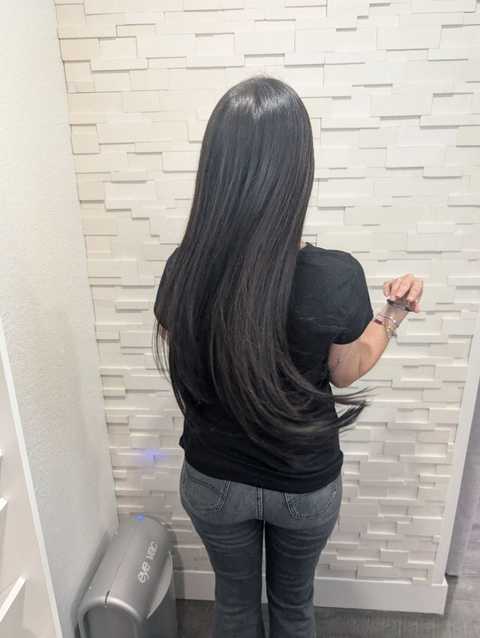
How flat ironing works
Flat ironing uses controlled heat to temporarily realign the hair shaft so strands sit smoother and lay flatter. The process reduces visible frizz and flyaways by closing the hair’s surface and creating a polished, glass-like finish. Results depend on the hair’s starting texture and how uniformly heat is applied during styling.
The outcome is shaped by hair porosity, previous chemical services, and surface condition; finer or chemically treated hair responds differently than coarse, textured hair. The studio schedules Flat Iron services in a 30 MINUTES slot, which accommodates assessment and styling for many typical lengths and densities while allowing discussion of desired finish and maintenance.
Preparing hair before styling
Before a flat iron appointment, communicate recent coloring, relaxers, or other chemical work so the stylist can assess hair integrity. A brief detangling and assessment help avoid extra passes and reduce stress on strands. Thorough consultation is part of the 30 MINUTES service to confirm the desired level of smoothness and any concerns about damage or breakage.
There is a trade-off between extreme straightness and long-lasting volume; very smooth, glass-like finishes generally lie flatter and may appear less voluminous. Discussing your daily routine—commuting, outdoor time, water activities—lets the stylist choose an approach that balances longevity and the look you prefer within the service timeframe.
Local climate and longevity
Cape-coral’s subtropical climate—hot, humid summers with frequent afternoon storms and milder dry winters—directly affects how long straight styles hold. High humidity and salt air from nearby waterways can cause styles to relax sooner, while dry winter conditions generally help the finish last longer. Expect variation rather than a fixed duration.
Practical considerations for local clients include planning appointments around outdoor activities like boating or waterfront walks, and choosing evening or weekend appointments if weekday schedules are tight. Commuters crossing bridges from Fort Myers often prefer flexible scheduling, and seasonal residents find weekend slots useful for aligning styling with local plans.